


Introduction
Sunscreens (SCs) are certainly not the best protective measure against sun radiation, but they are the quasi-exclusive protection used by millions of people during their vacation and leisure. Despite intense prevention campaigns, it cannot be expected that SCs will rapidly be replaced by clothes or prudent behavior, as a societal behavior change requires decades. It is thus crucial to study how to improve sun protection in the huge population of SC users.
SCs can reduce the development of precancerous solar keratoses (Darlington et al., 2003), the recurrence of squamous cell carcinoma (Green et al., 1999), and the development of nevi in children (Gallagher et al., 2000). Several meta-analyses failed to prove or disprove any relation about the role of SCs as a risk or protection factor for melanoma (Dennis et al., 2003). Three main factors compromise sun protection by SCs. First, SCs do not yet provide an ideal and stable barrier against the full UV spectrum, especially against UVA, which is now considered as a major carcinogenetic radiation (Agar et al., 2004), but this is rapidly improving. Second, SCs have been accused of prompting people to increase their sun exposure (Autier et al., 2000), but this is still debated (Dupuy et al., 2005). Third, SCs are used at a much lower quantity per surface than the amount used by the manufacturers to assess the sun protection factor (SPF), are often not adapted to individual skin type and situation, and are neither applied at a sufficient frequency, nor in a homogeneous way (Diffey, 2001). The way SCs are used is certainly the most limiting factor for skin protection, as a decrease in the SC thickness (Stokes and Diffey, 1997) applied on the skin results in a much higher decrease in the effective SPF protection. Among the multiple factors that can influence SC use and lead to an insufficient protection, two seem predominant: the high cost of SCs and, above all, the legal mentions on the bottles and packaging, that is, SPF for UVB and UVA, which are not understandable by most users. SPF does not clearly inform users on what actual effects could be expected or under what conditions they can be obtained (Taylor, 2004). As both labeling and price of SCs could be easily modified by a public health regulation, we designed a double randomized study to test whether an easy-to-understand and informative labeling of the SCs could favor a better quantitative and qualitative use with a subsequent better protection, and whether the cost is a real limitation to the proper use of SCs.
Results
Participants
Three hundred and sixty-four individuals (118 in free SC intervention (FS),118 in free SCs with the new visual labeling (FNL), and 128 in no intervention (NI)), with a mean age=39.3 (18–79) years and an excess of female volunteers (36.3% male, 63.7% female participants) actually participated among the 540 to whom the survey was proposed showing that males more often refused (Figure 3). The eligible people contacted who did not accept participation could not be questioned (agreement with VVF company, to avoid that customers be bothered in any way). According to the protocol, no individual participated in two intervention groups in the same or different resorts, and none of the participants belonged to the same family.
Figure 3.
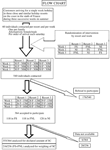
Flow Chart: Setting, selection of population, and randomization. SC, sunscreen; interventions include FS (=4 types of SCs bottles with their usual SPF label at disposal); FNL (=free SCs with the new visual labeling also at disposal); and NI (=no intervention).
Full figure and legend (51K)Comparability of the groups
The weather was purely sunny throughout the 3 weeks of the survey in the three close resorts. There was no significant difference between FS, FNL, and NI in the distribution of age, sex, socioeducational level, occupation, rate of acceptance to participate among people approached, color on the skin in the axillae, presence and density of freckles, Fitzpatrick skin type, self-assessed sun sensitivity, skin characteristics, motivation for sun exposure, usual utilization of SCs, and importance of tanning as an individual objective. When comparing participants by weeks for the same variables, there was no significant difference, except for the values attributed to tanning (proportion of tanning-indifferent (TI) of 12.3%, 17.8%, and 26.5% in the first, second, and third week, respectively). When comparing participants by resort over the 3 weeks, for the same variables, there were no significant differences, thus confirming the choice to pool data. Data presented for the effect of labeling and providing free sunscreen (infra) were the same when the effect of resort (clustering) was taken into account.
Descriptive data
Females exposed themselves more than males (4.27 vs 2.96 hours/day, P<0.001), people with dark skin more than people with intermediary skin and pale skin (4.23 vs 3.75 vs 3.39 hours/day, P=0.01), people who considered themselves as sun resistant (SR) slightly more than those who felt sun sensitive (SS) (4.17 vs 3.53 hours/day, P=0.001), and people who valued tanning (tan-seekers (TS)) more than the others (TI) (3.98 vs 2.98 hours/day, P<0.001).
Completion of questionnaires
In more than 90% of cases, data collected allowed measurement of both amount of cream and exposures: weight of SCs used in 216 cases (92% of groups FS+FNL), declared amount of SCs use in 355 cases (98% of the three groups), and time of intense exposure in 336 cases (92% of the three groups).
Effect of the clear labeling
On the weight of SCs applied
People randomized in the FNL arm used significantly more SCs (Table 1) than those in FS arm: median +19% more when expressed in quantity per hour of intense sun exposure over the week (intense exposure being defined as time spent in the sun in bathing-suit or bare trunk). There was a significant interaction between the impact of the labeling on the SC consumption and the way individuals valued tanning (Table 1). In the TI sub-population (19%), median SC use was more than 2-fold higher (Table 1) in the FNL arm than in the FS arm. Conversely, in the TS sub-population (54.5 and 26.5% of individuals who considered tanning as an important objective or as the main objective of their vacations, respectively), the labeling had little impact on the SC consumption (Table 1).
Table 1 - Effect of the new labeling and free availability on the amount of SCs applied in the three groups.
 Full
table
Full
table
On the selection of SCs
Taking the whole population, the only significant difference between the groups was a higher amount of class III SCs applied in FNL arm than in the other two arms (P=0.02). When looking into subgroups according to sun-sensitivity and attraction for tanning, the impact of a clear label was quite different (Figure 1). In TI-SR, providing SC bottles with a clear label induced a significant shift in the selection of SCs, from both SPF 12 and SPF 60 toward type SPF 20. In TS-SR, a clear label induced a significant shift from SPF 20 and SPF 60 to SPF 12. There was no significant impact of the clear label on the choice of SCs in SS-TI or SS-TS sub-populations (Figure 1).
Figure 1.
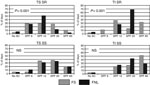
Influence of the label on the SC choice. SC, sunscreens; SPF, sun protection factor; TI, tanning-indifferent; TS, tan-seekers; SS, sun-sensitive individual; and SR: sun-resistant individual. Comparative distribution of SC choice in the two arms with SCs at disposal: FNL vs FS. The distribution is expressed in % of days (with at least 2 hours exposure) during which an SC type was chosen by FS and FNL groups. The distribution is presented in four sub-populations defined on the basis on their interest for tanning, that is, TS or TI, and subjective sun-sensitivity, that is, those who consider themselves as SS or SR individuals.
Full figure and legend (91K)On the protection against sunburn
In the whole population, the label did not significantly
affect the proportion of individuals presenting sunburns. However, among people
with a high sun sensitivity, there was a much lower proportion of individuals
experiencing a sunburn in FNL than in FS: 12.5 vs 50% (P=0.04),
11.8 vs 46.2% (P=0.049), 21 vs 37.2% (P=0.03), and
25.6 vs 58.3% (P=0.005), when sun sensitivity was defined by a
pale skin, a high density of freckles, a skin declared pale or clear, and a
Fitzpatrick skin type  II,
respectively.
II,
respectively.
On the sun exposure
Time of sun exposure with no clothes was not significantly different (P=0.72) in FS and FNL (Table 2).
Table 2 - Effect of new labeling and free delivery on the sunburns and duration of sun exposure.
Full
table
Effect of providing free sunscreen
On the declared amount of SCs applied
The amount of SCs applied in FNL according to the participant declaration was significantly higher than in NI (Table 1). The proportion of people who systematically applied SCs when they exposed themselves in a bathing suit was significantly lower in NI (52.8%) than in FS (79.5%) and FNL (80.5%) (P<0.001). The proportion of people spending half or more of the week sunbathing without SCs was much higher (P<0.001) in the NI (26%), than in the other groups (0% in FS and 2.7% in FNL, respectively).
On the selection of SCs
The only significant difference between FS arms and controls arms as to the declared amount of each class of SCs is that FNL arm applied more class III SC than NI arms (P=0.02): median (inter-quartile range) 0.5 (13) vs 0 (7) coffee-spoon/day, respectively (other data not shown).
On the sunburns
The proportion of individuals presenting at least one sunburn during the week was significantly lower in the FS and the FNL than in the NI arm (29.9 vs 21.2 vs 46.8%, P=0.001).
On the sun exposure
The mean time of intense sun exposure was not different in the NI group and the two FS delivery groups (Table 2). However, in the TS sub-population, there was a significantly lower exposure in these two FS arms.
Discussion
This is the first interventional study in a normal population to assess how much SC use and thus skin protection can be influenced by information and cost. Just by changing the usual SPF labeling on the SC bottle into clear information in terms of protection against sunburns, tanning, and likely prevention in the long term, there was an increase of the amount of SCs applied, with a better protection as shown by the decrease in sunburn frequency. However, most of the results were obtained in subgroups. The effect of labeling was mainly seen in individuals who did not consider tanning as a priority. This is indirect evidence that the official SPF UVB (and UVA) labeling contributes to misleading people, in spite of their desire to be protected. Conversely, in people who consider tanning as a priority, explicit labeling does not increase the quantity of SCs applied, thus confirming that full preventive efficacy will also require a deep change in the aesthetic criteria of our society. As "tan-seekers" represent a majority in this study conducted in beach resorts, the impact of labeling may have been diluted and could be more clearcut in a less tan-seeking population. With the free delivery of SCs, the main effect was a more systematic use of SCs at each episode of sunbathing. Although the comparison of the use of free SCs with the use of SCs that consumers have to buy is not a direct assessment of the impact of SC cost, our data strongly suggest that economic reasons may prompt people to not use SCs as frequently as they wish.
Even with completely free SCs, the mean amount of SCs applied, estimated at 0.75 mg/cm2 in FS and FNL groups per day with sun exposure (data not shown), is much lower than the 2 mg/cm2 amount used in the assessment of the SPF mentioned on the SC bottles. This suggests that most people are probably not ready to apply an uncomfortable thick layer of SC. Therefore, any test proposed to assess in vivo sun protection of SCs, such as SPF, should either use much lower doses of SCs or at least be translated in the realistic protection offered by the thickness usually applied in real life.
In this short-term study, sunburn occurrence was the only way to assess whether a more correct use of SC resulted in better skin protection. Sunburns are an immediate consequence of UVB irradiation, and are not necessarily a good surrogate for the protection of the skin against long-term effects, including UVA-mediated ones. As compared to the usual SPF labeling, an explicit labeling dramatically decreases the proportion of sun-sensitive individuals who experienced a sunburn during a week's holiday on the seaside. Whether this immediate effect could really transform into a better protection against skin cancer and skin aging is questionable.
From a public health point of view, it could be argued that those people who better use SCs owing to a new explicit labeling, that is, "tanning-indifferent" and "sun-sensitive" people, are also those who would better completely avoid sun exposure. Expecting a drastic change in behavior is unrealistic, and a better use of SC is already a first positive step. From the same point of view, it is noteworthy that neither a clear labeling nor providing free sunscreen clearly influences the amount of SCs applied by "tan-seekers". In this subgroup, a clear labeling can even induce a tendency for those who consider themselves as SR to choose lower SPF SCs (Figure 1), probably because it makes it clear that very high SPF prevents tanning. However, the favorable effect of explicit labeling is to have these "tan-seekers" face the incompatibility between skin protection and search for tanning, and to force them to make a conscious choice between tanning and safety.
The direct impact of SCs on sun behavior has been debated. A study suggesting that providing high-SPF SCs could prompt people to increase their sun exposure (Autier et al., 2000) was not confirmed by our group (Dupuy et al., 2005). Our data suggest that neither better information nor providing free sunscreen induces more exposure. SCs do not appear as behavior modifiers, but rather as tools that people choose and use according to their own objectives, depending on the way they understand or interpret the SC labeling (Thieden et al., 2005).
Our study does not support or criticize SPF-B or -A as such. Whatever the methods that are currently used or will be used to assess the biological efficacy of SCs, this study shows that SC labeling must not be limited to technical parameters, but should be translated into realistic and understandable information for the public, so that anybody is able to make an informed and conscious choice. This requires a clear statement about the three properties for which he/she may, rightfully or not, choose to apply SCs: protection against sunburns, possibility to get a tan, and protection against skin cancer and skin aging. The communication is, however, difficult as the message about the prevention of long-term effects of sun exposure by SCs will remain uncertain for a long time. No real evidence-based data will be soon available to support the protection against skin aging and skin cancers. Intervention trials have only shown that intensive use of SCs could prevent keratoses and squamous cell carcinoma in high-risk people, and nothing can be said about melanoma (Green et al., 1999; Darlington et al., 2003). This uncertainty is one of the reasons why SCs are still presented only by their SPF, or by classes in "high", "intermediate", or "low protection", without precision about what they protect from. Although the labeling used in this study provides cautious, honest, and clear information according to the present state of knowledge, all the statement can be criticized point by point. It must be underlined that the purpose of the study was not to find the best message (which could be the target of a consensus meeting organized by regulatory activities) but to show that providing information, even uncertain, is better that no information at all, and that SPF leads to much more uncertain interpretations by the SCs users than the labeling proposed in this survey.
On a methodological point of view, biases were limited. The groups were well balanced according to most important variables relevant to sun exposure and SC use. The study was conducted to interfere as little as possible on the individual's behavior. There was no interaction between groups, as the different randomization arms were never mixed at the same time in the same resort, and they represent only a minority of each resort population. The participants of FS and FNL received FS for their relatives, so that the weighing of their own SC bottles reflected their own consumption. One could suspect that individuals could tend to declare somewhat differently the amount of SCs used or sunburns depending on the group of allocation. However, this is unlikely, as all were blind to the real objectives of the study as well as to the comparison and randomization process. Furthermore, the differences between groups were always consistent: consistency between higher declared amount and higher weighed quantities, consistency between higher declared amount of SCs applied and lower declared frequency of sunburns.
The population in the resorts was constituted by middle class families, and there was an excess of females in the volunteers. This sample is thus not representative of the general population in France. However, neither sex, age, educational level, nor occupation had any significant interaction with the intervention on SC consumption, thus suggesting that the difference between arms would probably be similar in a different adult population sample. Interactions between labeling and providing free sunscreen cannot be thoroughly investigated, owing to the lack of an intervention arm requiring payment for the SCs with the new labeling. This arm was impossible to constitute, as it would have been understood as a commercial operation, with a major impact on behavior.
Although public health policy must aim at modifying societal behavior toward sun exposure, this is a long-term challenge and most people will continue for a long time to prefer SCs than changing their holiday and leisure habits. An explicit labeling of SC bottles is an immediately active public health measure, which combines very well with all other long-term educative programs. The effect of labeling was much clearer in the tanning-indifferent individuals, which may be more represented in the general French population, and in other countries than in this study sample. Free access to SCs favors a more systematic use of SC when people are in the sun, suggesting that lowering cost may also be a favorable measure.
Materials and Methods
Design
Three-arm prospective randomized trial in a realistic situation. The experiments conducted in this study had institutional approval.
This study was performed according to the Declaration of Helsinki Principles. As a simple observational survey of sociological behavior of normal individuals in normal life, without intervention on individuals or randomization of individuals, this study was not considered by the ethical committee of Marseille AP-HM as a trial requiring ethical advice or authorization. Individuals gave their informed consent to participate in an observational survey, but in order to avoid that the information could distort their behavior, neither the objectives of the study nor the randomization of resorts were mentioned.
Setting
Three beach resorts on the Mediterranean coast in July–August 2003, close (<30 km) to each other, with the same services, same socioeconomic profile of customers (French mid-class), ruled by the same touristic company (VVF).
Material and labeling
Four types of commercialized SCs (provided by Pierre Fabre Dermo-Cosmetique, Allée Camille Soula, Castanet Tolosan, France) were used in the trial, either with their usual packaging with SPF-B and -A labels (60B-60A, 20B-20A, 12B-12A, 6B-3A) or with a new labeling designed to fulfill the following conditions: (1) be easily understandable by anybody; (2) provide a clear statement about the three properties of the SCs, which account for the practical choice of SCs by any consumer: ability to protect from sunburn, likely protection against long-term effects of the sun exposure (skin aging and cancers), and possibility of tanning; (3) be consistent with the present scientific knowledge, and as cautious as possible; and (4) be easily readable at first glance on the bottle. The four types of SCs were thus labeled from level I (6B-3A) to IV (60B-60A) with four colored mentions (Figure 2):
- A "red" mention about the efficacy of the protection against sunburns: "quasi-total protection, important protection, moderate protection, very weak protection" for level IV to level I SCs, respectively;
- A "brown" mention about the possibility to get a tan: "impossible to get", "difficult to get", "easy to get", and "very easy to get" for level IV to level I SCs, respectively;
- A "blue" mention about the likely protection against long-term effects of sun exposure. Owing to the many uncertainties on this topic, this last mention was presented with cautious terms: protection "likely to be maximal for a sunscreen according to the present knowledge, but not complete protection", "likely to be high for a sunscreen according to the present knowledge, but not complete protection", "likely to be weak for a sunscreen according to the present knowledge and not suitable for intense exposure or sun-sensitive skin", and "probably no protection out of the common daily exposure and not suitable for important exposure or sun-sensitive skin", for level IV to level I SCs, respectively.
- To these three statements were added: "Be careful! These effects can be
obtained only on condition that at least
.gif) of the bottle, that is 25 ml, is applied if the whole skin is exposed,
and that it is reapplied every 2 to 4 hours, especially if going in the
water. Decreasing a little the amount of SC applied can reduce a lot the
protection".
of the bottle, that is 25 ml, is applied if the whole skin is exposed,
and that it is reapplied every 2 to 4 hours, especially if going in the
water. Decreasing a little the amount of SC applied can reduce a lot the
protection".
Figure 2.
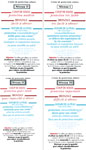
Explicit labeling of the SC bottles used in group FNL. See translation in text.
Full figure and legend (313K)Finally, it was mentioned on all bottles that "SCs are not the best way to protect one's skin, and that sun avoidance is the best solution".
Interventions
The three intervention arms were as follows: (1) FS: four types of SCs bottles with their usual SPF label were at the disposal of each volunteer who could change the type of SC at any time, provided that the old bottle was given back; (2) FNL: same four types of SCs with the new informative labeling also at disposal; and (3) NI, people using their own SCs, which they had bought if any.
Objectives
The main objective was to assess if a more explicit labeling of SCs could favorably influence the quantity of SCs applied and the choice of SCs, and whether cost could be a limitation to the use of SC.
Secondary objectives were the following: determine whether these two interventions could impact the number of sunburns, whether free delivery may prompt people to increase their sun exposure, and whether clear information could incite them to decrease it, depending on their attraction for tanning, their perceived sun-sensitivity, and sociodemographic data.
Randomization, selection of population, and eligibility
The three intervention groups, FS, FNL, and NI, were attributed by randomization to one of three close resorts on the French Mediterranean coast (VVF resorts), so that three 1-week interventions were successively performed in each resort, in a different order, over 3 successive weeks (end July–early August 2003). First randomization was performed to allocate each of the three interventions to a resort for the first week, and a second randomization was performed to allocate the order of the second and third intervention in the first allocated resort, which thus automatically determined the order of the others intervention in the two other resorts. Individual randomization was discarded to avoid a major bias owing to probable behavioral interactions between subjects randomized to different interventions staying in the same resort at the same time with the risk of unblinding the objectives (Figure 3).
Each week, in each center, one Caucasian adult between 18 and 65 years per family was contacted, in each family arriving in the resort on the Saturday for a week holiday, by order of arrival, alternatively one female participant in a family, one male participant in the next one. The process was continued up to 60 individuals contacted (30 male, 30 female participants), so that the number of participants or contacted people remained a minority in the resort. These individuals were invited to participate in a survey on "sun and skin" without mentioning SCs. As a compensation for participation, they were proposed a gift at the end of the study. The volunteers had to accept the following conditions: to fulfill a one page self-questionnaire every evening, and (only for those randomized in FS and FNL weeks), to use only the different FS at their disposal, to bring back all SC bottles, empty or not, and to refrain to use any other SCs or lend their SC bottles. To limit potential biases, the volunteers in FS and FNL groups were provided with SCs for their family.
Blinding
The participants of the survey were blind to the real objectives of the survey, and were not even informed that they were part of a randomized study with different interventions. Although the members of the study staff in each resort who ensured the logistic aspects of the survey (recruition, SC providing, questionnaire collection, SC weighing) could not be blind to the intervention, they were blind to the randomized comparative design, and to the hypotheses and objectives. They were not involved in any subjective assessment of outcomes. In this regard, this study can thus be considered as double-blind. Members of the staff were trained to refrain from any interference (responses to question, comments, advice, help to fulfill questionnaire) with the tourist behavior.
Main outcome measures
"Weighed quantity" of SCs applied was measured by weighing the SC bottles brought back after use. This measure was used to compare FS and FNL and thus assess the impact of the label on SC consumption. In the control group (NI), weighed quantity was not reliable, as people used their own bought SCs, and could thus obviously share it with their relatives. Therefore, to permit a quantitative and qualitative comparison between NI and the two other arms, and thus assess the impact of the free delivery, "declared quantity" of SCs applied was collected by the daily self-questionnaire in the three groups, and each commercial SC used by the individuals in the NI arm was assimilated to the closest of the four levels of SCs freely provided in the FS and FNL arms. The measure unit for "declared quantity" of SC was "coffee-spoon of SC", which we have previously shown to be a more suggestive and reliable unit than "grams", "quarter-of-a bottle", "finger top", and "node".
Sun exposure and sunburns were estimated by daily chronologic tables self-completed every evening, recording sun exposure by units of 30 mn, using figurines to explain the % of skin exposed (Figure 4).
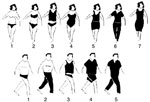
The initial self-questionnaire was used to define sub-populations: two according to self-perceived sun-sensitivity, that is, individuals who considered themselves as rather SR or rather SS, two according to the importance of tanning as an objective for the week holidays, that is, rather TI, or rather TS, and four sub-populations by combination (TS-SR, TS-SS, TI-SR, and TI-SS).
Sample size calculation
A sample size of 100 or over in each groups was retained to get a power of 0.80 in a two-sided Student's t-test with the hypothesis of a difference of 10 g of SCs applied per week, with an s.d. of 25.
Statistics
Considering that the three resorts admitted the same
sociodemographic customers, that is, same touristic company (VVF), providing the
same level of services and hotel on the same seaside), had the same weather
(very close to each other), during 3 equally attractive successive weeks in
summer (3 most popular weeks of summer holidays in France), the cluster effect
of randomization by resort/week was considered as negligible, and the data were
pooled by intervention. .gif) 2
test (or Fisher) was used to compare the distribution of qualitative variables,
and analysis of variance on logarithm of variables in order to stabilize
variances with post hoc test was used to compare quantitative variables
and account for the interaction between interventions and potential modifying or
confounding factors such as self-assessed sun-sensitivity, importance of tanning
as an individual objective, sex and sociooccupational categories. Planned
subgroup analysis was conducted with the four previous sub-populations (SS, SR,
TI, and TS). The significance level was 5%.
2
test (or Fisher) was used to compare the distribution of qualitative variables,
and analysis of variance on logarithm of variables in order to stabilize
variances with post hoc test was used to compare quantitative variables
and account for the interaction between interventions and potential modifying or
confounding factors such as self-assessed sun-sensitivity, importance of tanning
as an individual objective, sex and sociooccupational categories. Planned
subgroup analysis was conducted with the four previous sub-populations (SS, SR,
TI, and TS). The significance level was 5%.
References
- Agar NS, Halliday GM, Barnetson RS, Ananthasmany HM, Wheeler M, Jones AM (2004) The basal layer in human squamous tumors harbors more UVA than UVB fingerprint mutations: a role for UVA in human skin carcinogenesis. Proc Natl Acad Sci USA 101:4954–4959 | Article | PubMed | ChemPort |
- Autier P, Dore JF, Reis AC, Grivegnee A, Ollivand L, Truchetet F et al. (2000) Sunscreen use and intentional exposure to ultraviolet A and B radiation: a double blind randomized trial using personal dosimeters. Br J Cancer 83:1243–1248 | Article | PubMed | ISI | ChemPort |
- Darlington S, Williams G, Neal R, Frost C, Green A (2003) A randomized controlled trial to assess sunscreen application and beta carotene supplementation in the prevention of solar keratoses. Arch Dermatol 139:451–455 | Article | PubMed |
- Dennis LK, Beane Freeman LE, VaBeek MJ (2003) Sunscreen use and the risk of melanoma: a quantitative review. Ann Intern Med 139:966–978 | PubMed |
- Diffey B (2001) Sunscreen isn't enough? J Photochem Photobiol Biol 64:105–108 | ChemPort |
- Dupuy A, Dunant A, Grob JJ (2005) A randomized controlled trial testing the impact of high protection sunscreens on sun behaviour. Arch Dermatol 141:950–956 | Article | PubMed |
- Gallagher RP, Rivers JK, Lee TK, Badjik CD, Mc Lean DI, Coldman AJ (2000) Broad-spectrum sunscreen use and the development of new nevi in white children: a randomized controlled study. JAMA: 14:2955–2960 | Article |
- Green A, Williams G, Neale R, Hart V, Leslie D, Parsons P (1999) Daily sunscreen application and betacarotene supplementation in prevention of basalcell and squamous cell carcinoma of the skin: a randomized controlled trial. Lancet 354:1038
- Stokes R, Diffey B (1997) How well are sunscreens users protected? Photodermatol Photoimmunol Photomed 13:186–188 | PubMed | ISI | ChemPort |
- Taylor SR (2004) SunSmart Plus: the more informed use of sunscreens. Med J Aust 180:36–37 | PubMed |
- Thieden E, Philipsen PA, Sandby-Moller J, Wulf HC (2005) Sunscreen use related to UV exposure, age, sex, and occupation based on personal dosimeter readings and sun-exposure behavior diaries. Arch Dermatol 141:967–973 | Article | PubMed |
Acknowledgments
We acknowledge Pierre Fabre Dermo-Cosmetique for providing sunscreens. Pascal Bordat, Pierre Morinet, and France Boyer for their help in the organization of the study, and VVF Vacances for hosting the study. This work has been done in "La Grande Motte", "Le Grau du Roi", and "Le Cap d'Agde", VVF Vacances, France.


